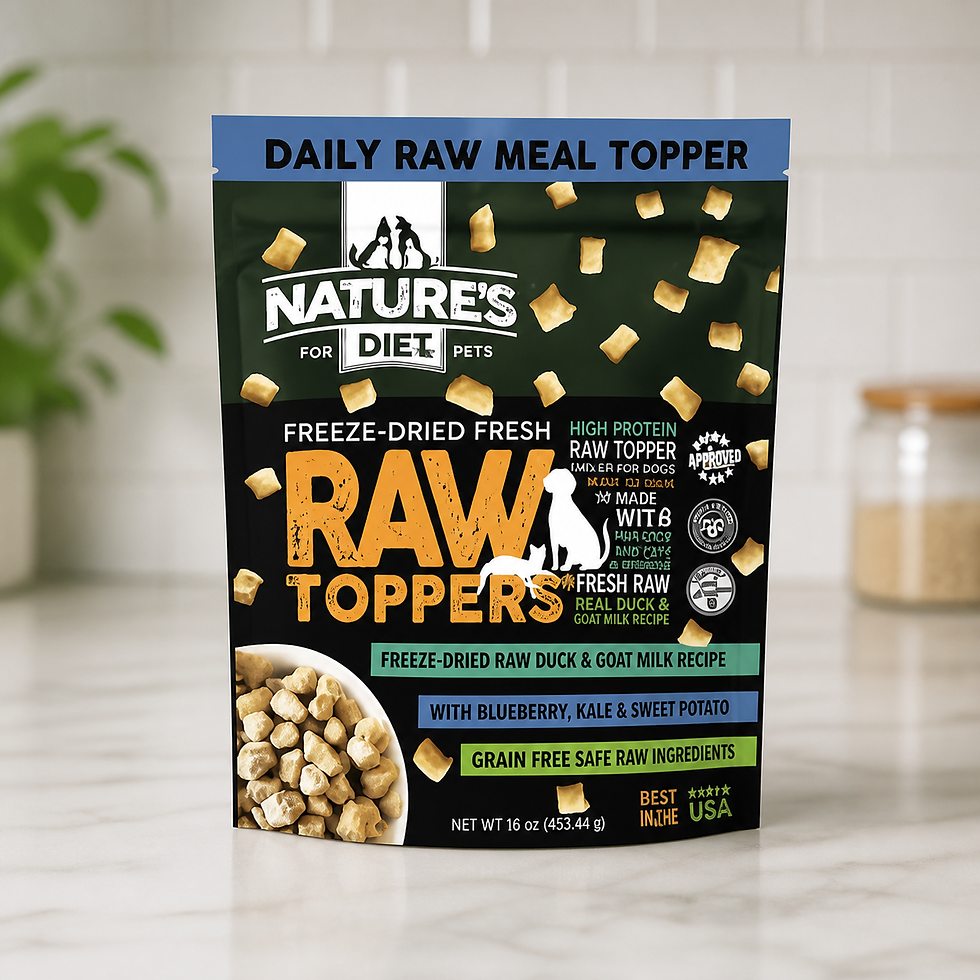
How to read a pet food label

Pet food labels are full of words that sound reassuring and explain almost nothing.
Natural. Premium. Holistic. High quality.
By the time you have read three bags in a row, you can know a lot of marketing language and still have no clearer idea what the food is actually built around.
It helps to ignore the front-of-bag promises and look for the facts that really matter.
You do not need a veterinary degree to read a pet food label more intelligently. You just need a short checklist that shows you what matters first.

Start With the Ingredient Panel, Not the Front of the Bag
The front of the package is where a brand sells an image. The ingredient panel is where they show priorities.
Whether you're feeding a dog or a cat, you want a diet that's based around protein: and that means meat. Look no further than the first ingredient of Simply Raw®, Ready Raw®, or other complete meals from Nature's Diet, and you'll find real animal proteins, not filler or slop.
For example, a label that opens with ingredients like `chicken, chicken necks, chicken gizzards, and chicken liver` tells you something very different from a label that makes you dig to figure out where or what the animal protein really is.
That does not mean every good food will look identical. It means the ingredient list should support the promise the brand is making.
Nature's Diet offers a range of products, not just complete meals, but products like Simply Raw®, Ready Raw®, and Original Chicken Bone Broth all clearly center meat, organ, bone broth, and simple supporting ingredients rather than vague "better for your pet" language.

Look for Specific Exclusions, Not Generic Clean-Eating Tone
Another signal of honesty is how specific a brand is about what is not in the product.
Across multiple Nature's Diet products, the exclusions are stated directly:
no fillers
no grains
no unnatural preservatives
no added flavorings or dyes
That kind of specificity is more useful than broad wholesome language because it tells you something concrete about the food. It also gives you something concrete to compare across categories.
You do not need to memorize a perfect list of forbidden ingredients. You do need to notice whether the brand is being concrete or just trying to sound cleaner than it really is.
There is one more small-print detail worth learning: the AAFCO nutritional adequacy statement. It tells you whether a food is complete and balanced for a given species and life stage. Just as important, AAFCO also notes that treats and supplements usually will not carry that statement, because they are not meant to replace the main food.
Check Whether the Ingredients and the Product's Job Match
A trustworthy label doesn't contradict itself.
If a food is sold as meat-forward, the ingredient label should support that. If a product is meant to be a topper or broth, the serving style and instructions should make that role obvious. If a supplement has a narrow purpose, the ingredients should stay focused instead of trying to do everything at once.
Here, basic skepticism matters more than rule-following.
The basic questions are straightforward. Does the label explain the product clearly? Do the ingredients match the claimed purpose? Are the claims precise, or are they mostly for show? Clear answers make the food easier to judge.
These are the questions we ask ourselves when designing the labels for our pet foods and supplements, and they're the questions we encourage you to ask when comparing pet food labels.
When You Are Comparing Two Products
If you are deciding between two bags, it helps to begin with the early ingredient panel and ask which formula seems more protein-led. From there, look at whether each product clearly tells you what it is, whether the exclusions and claims are concrete, and whether the whole thing makes sense without extra interpretation. That last point matters more than people think. A label that explains itself clearly is easier to trust than one that leaves you guessing.

The Brand Should Make the Label Easier, Not Harder
One of the most overlooked signals is whether the label helps you understand the food or hides behind language that sounds elevated but stays vague.
Trustworthy brands usually do a few things well: they separate foods and supplements by job, explain whether something is a staple meal, topper, broth, or supplement, and make the exclusions and role of the product easy to spot.
That does not guarantee the product is right for every pet. It does make it easier to understand what you are considering, which is one of the clearest signs of honesty.
A Short Version
Look for named proteins early in the ingredient list. Notice whether the product clearly tells you what it is. Pay attention to whether the brand is specific about what is not included, and whether the ingredients match the product's role. That short list will tell you more than most front-of-bag claims ever will.
Better Labels Make Better Decisions Easier
The benefit of learning to read labels is simple. You make steadier choices and waste less time on vague promises.
Once you know what to look for, vague claims lose power. Meat-forward foods become easier to spot. It also gets easier to separate solid products from products that rely mostly on presentation.
That does not mean every good option will look the same. It means you can judge products by structure, not by buzzwords.
That is a better way to shop. Instead of relying on the front of the bag, you start relying on consistency, clarity, and whether the formula matches the job it is supposed to do.

A Practical Next Step
If you want a freeze-dried raw example to compare against standard label language, start with Simply Raw®.
If you want to compare a convenience-first complete meal, review Ready Raw®.
If you want a simpler add-on example, look at Original Chicken Bone Broth.